
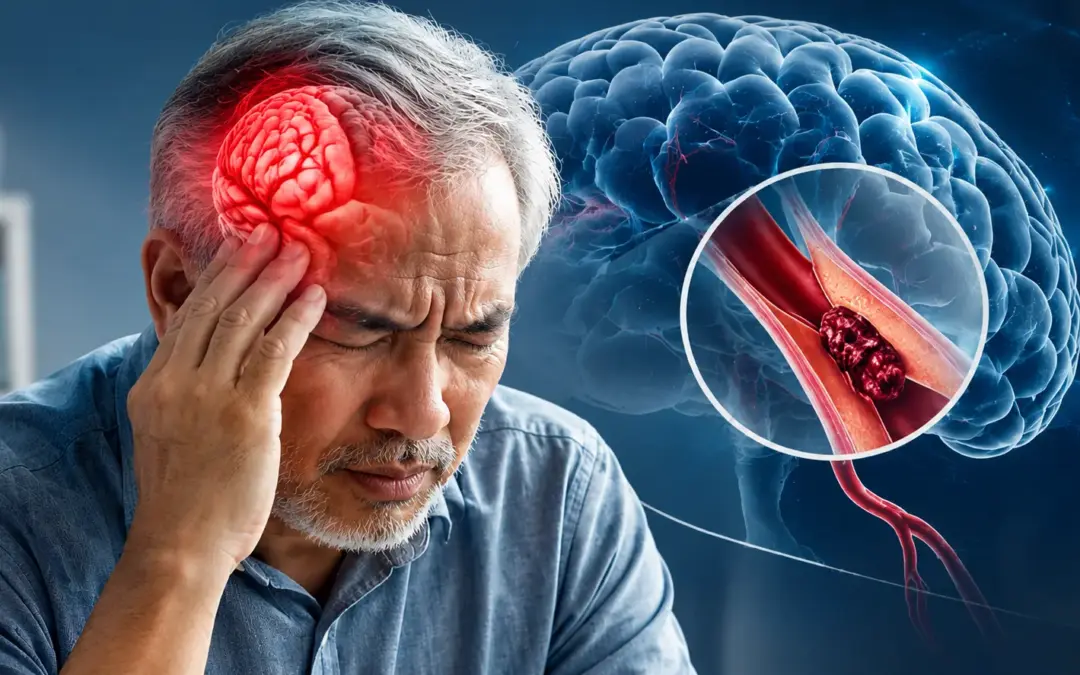
If someone near you suddenly can’t smile properly, can’t lift one arm, or starts slurring their words, you’re watching a stroke happen in real time. The F.A.S.T. checklist, face, arms, speech, time, exists because most people freeze for a few crucial minutes before calling for help. A newer version, B.E. F.A.S.T., adds two signs the original misses: sudden loss of balance and sudden changes in eyesight.
According to Dr. Shailesh Adwani, General Physician at Lifeline Multispecialty Hospital in Ravet, “People notice the drooping smile, the arm that won’t move right, and then they wait, thinking maybe it’ll pass. That waiting is what costs someone their recovery.”
Spotting the signs is the easy part. Acting on them immediately is what protects a person’s chances.
Reduce your risk before FAST ever becomes necessary
What Do the FAST and BE FAST Warning Signs Actually Look Like?
Each letter is something you can check in seconds, nothing vague about it.
- Face: Ask the person to smile. One side drooping or feeling numb is often the very first sign, showing up before anything else does.
- Arms: Ask them to raise both arms. One arm sagging down or refusing to lift isn’t tiredness, it’s one of the clearest indicators there is.
- Speech: Slurred words, struggling to find the right word, or speech that sounds off all point toward a stroke in progress.
- Balance and Eyes: Sudden dizziness, loss of coordination, or vision that changes out of nowhere. These carry just as much weight as the rest, even though people tend to mention them last.
None of this requires equipment, just a few seconds of attention. The emergency care team at Lifeline is set up to move the moment a patient comes through the door.
What Happens After You Call for Help, and Why Does Every Minute Matter?
What happens in the next hour or two after a suspected stroke often ends up shaping the whole recovery.
- The call itself: An ambulance beats driving yourself for reasons beyond just speed. Paramedics start assessing the patient on the way there, and the hospital already knows to expect them, so less time gets lost at check-in.
- The treatment window: Some clot-dissolving drugs only work if given within a certain number of hours after symptoms start. That’s why pinning down exactly when symptoms began matters almost as much as the symptoms themselves.
- Imaging on arrival: A CT scan usually happens within minutes of getting to the hospital. It tells doctors right away whether they’re looking at a blocked vessel or a bleed, and those two need completely different treatment.
- What follows treatment: Once the acute phase is over, rehab planning tends to start pretty quickly, since starting early generally leads to better outcomes down the line.
Speed matters more than anything here. Knowing the fastest emergency access route, before you actually need it, is worth figuring out ahead of time.
Why Choose Lifeline Multispeciality Hospital in Ravet?
Dr. Shailesh Adwani, MBBS MD, leads the general medicine team at Lifeline, with a focus on catching emergencies like stroke fast, since that first assessment shapes everything after. The hospital runs a 24/7 emergency and trauma unit built to take in suspected stroke cases without delay, with scans and evaluation available at any hour.
Call +91 9172519029 the moment you notice these signs, or come directly to the hospital near Sant Tukaram Maharaj Bridge, Ravet, Pune.
FAQ's
How quickly should someone get to the hospital after stroke symptoms appear?
Right away. Faster treatment gives a much better shot at avoiding lasting damage.
Does calling an ambulance actually make a difference over driving myself?
Yes. Paramedics start assessing on arrival, and the hospital is already expecting you.
Are all strokes the same, or do they need different treatments?
No. A blockage and a bleed call for different treatment, and the scan on arrival tells doctors which one it is.
Can someone recover fully after a stroke?
It depends on how fast treatment started and which part of the brain was affected. Many patients do regain real function.
Disclaimer: This content is for informational purposes only and doesn’t replace a consultation with a qualified physician.

